
Coordinate a New York employee departure with counsel
Start with the company information of concern and the employee's last day. We can coordinate the return or remote handling of equipment, preserve authorized email and cloud records, and compare file activity with messages and account events.
For counsel managing a deadline, the useful first decision is which sources to preserve now and which questions require detailed analysis. GDF can discuss a defined initial activity report or a broader examination, with the collection contacts and reporting schedule agreed at the outset.
Arrange a New York departure review
Start with the employee's working locations, company devices, business accounts and the information at issue. A laptop in a home office, a phone used for work and email administered by an outside IT provider may require separate collection arrangements. We coordinate those contacts and sources with the retaining team.
For a focused initial review, ask about GDF Core Analysis: flat-rate preservation and an activity timeline for the agreed scope. It can include email, documents, computer activity, chats, cloud sharing and available AI-use records. The report gives the employer and attorney an understandable account of the relevant events.
An expanded examination can follow identified transfers and prepare detailed exhibits, discovery material and expert testimony. For executives or separating business partners, define the authorized company records and business questions at the outset.
For New York City, Long Island and Westchester engagements, tell us where the devices are held, who can authorize access and when counsel needs initial findings. We can coordinate remote email collection while users continue working and arrange the appropriate handling of computer evidence.
- New York email and cloud collection
- Preservation and eDiscovery coordination
- Reports and testimony
- GDF Core Analysis scope and deliverables
Can you examine employee email theft for a New York employer?
Yes. We coordinate authorized company email, cloud and device collection, examine the relevant transfers and prepare an activity timeline for the employer and counsel. Identify the devices, accounts and departure dates when you contact us.
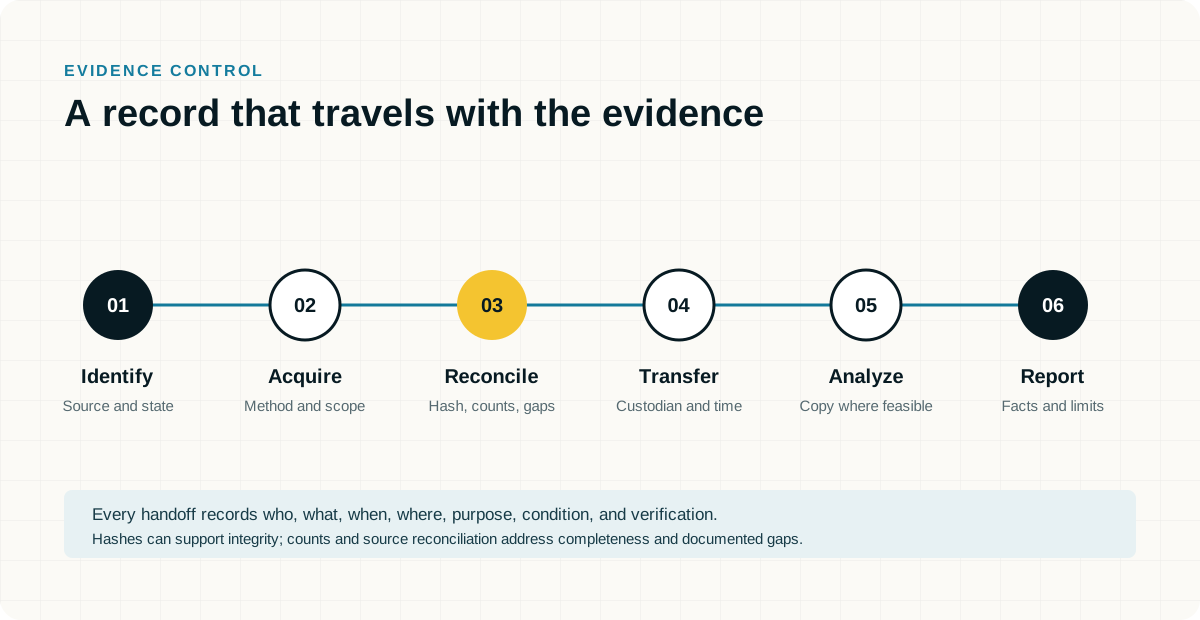
Departures create two competing pressures: secure the environment quickly and retain the technical record. GDF coordinates with counsel and IT to preserve relevant devices, accounts, file repositories, access events, email, collaboration data, and removable-media history before ordinary offboarding changes the source.
A preservation hold that IT can execute
The plan identifies laptops, phones, virtual desktops, mailboxes, cloud drives, shared repositories, development platforms, backup sources, and security logs. It distinguishes actions that should happen immediately from actions that can wait for imaging or export. The objective is to reduce ongoing access without destroying useful historical data.
Counsel defines legal scope and privilege. GDF documents technical sources and implements the approved protocol. Human resources and security teams receive a concise preservation checklist rather than a generic instruction to save everything.
Activity examined in context
USB connections, archive creation, bulk file access, personal cloud synchronization, email forwarding, code-repository activity, deletion, remote sessions, and authentication events may be relevant. None is treated as misconduct by itself. Analysts compare the activity with job duties, ordinary workflow, timing, file sensitivity, and corroborating records.
- Rapid laptop and cloud-account preservation
- File-access, copy, deletion, and transfer timelines
- Personal email, USB, browser, and sync-service artifacts where in scope
- Source-code and repository activity analysis
- Reports and declarations prepared under counsel's direction
Findings that separate fact from suspicion
The deliverable identifies what happened, the source supporting it, and the limits of attribution. It avoids inferring intent from a single technical event. If a gap can be addressed through a server log, administrator record, or third-party subpoena, that next source is identified.