
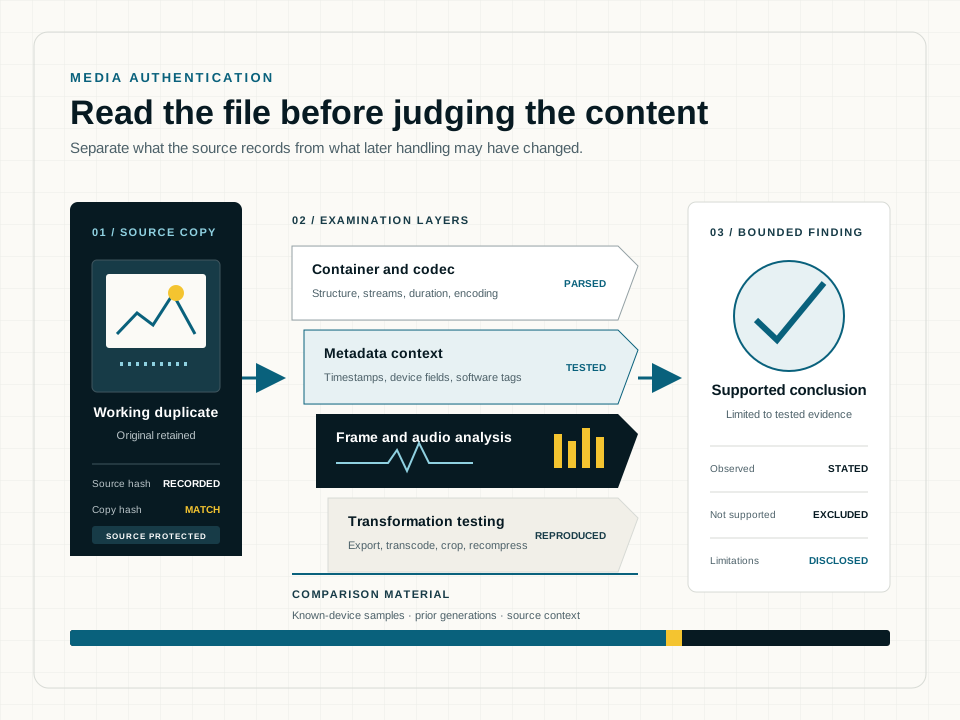
Media authenticity questions now involve ordinary editing, messaging-platform recompression, screen recording, generative tools, voice synthesis, and incomplete provenance. GDF begins with the highest-quality available source and documents how each copy was obtained. The examination uses multiple methods rather than treating one automated classifier as a conclusion.
The original file can change the answer
Social platforms and messaging applications often remove metadata, resize frames, transcode audio, and recompress video. A posted copy may support only a limited opinion. Where possible, analysts preserve the originating device, native file, cloud library, message attachment, editing project, or platform export. Hashes and custody records tie each examined item to the supplied source.
A layered technical examination
Methods may include container and codec review, metadata consistency, frame and waveform analysis, compression artifacts, sensor-pattern tests, edit boundary review, transcript comparison, background continuity, and provenance standards where present. Suspected synthetic media is tested against known failure modes and the limits of current detection methods.
- Photo and document-image provenance
- Video edit, frame, timing, and container analysis
- Audio continuity, splice, and voice-comparison support
- AI-generated and manipulated-media assessment
- Rule 901-focused technical support under counsel's direction
Conclusions calibrated to source quality
The report states whether findings support consistency, inconsistency, alteration, or an indeterminate result. It does not convert the absence of a detected edit into proof of authenticity. If a better source or known exemplar would materially improve the work, that need is identified before testimony.