
A practical plan, whether this is your first matter or your fiftieth
GDF helps counsel review proposed stipulations, discovery demands and keyword lists. We explain which sources can answer the request, how collection will work and which processing choices affect cost. Counsel sets the legal scope; we translate it into a documented collection and production plan.
Make the budget part of the plan
Our internal tools support deduplication, processing and production preparation, reducing repetitive work and the volume that needs review. We can discuss hosting and review options for small and midsize clients, and compare the work proposed in an existing vendor quote with the evidence you need.
Keep your client working
Remote email collection lets users continue using their accounts. For computer and phone evidence, we coordinate the collection with the client and the agreed protocol. You receive collection records, relevant metadata and production files prepared to the agreed specification.
Explore Microsoft 365 email collection or expert reports and testimony for the same matter.
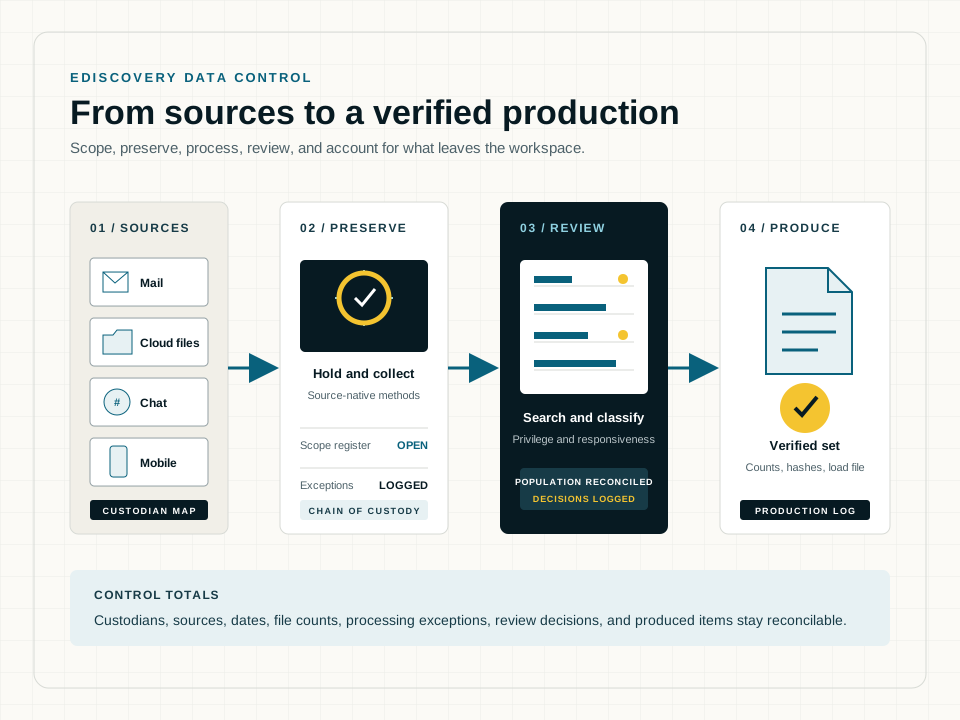
GDF supports counsel with defensible eDiscovery data preservation and collection across devices, email, cloud accounts, file shares, collaboration systems, mobile sources, backups, and specialized applications. The technical protocol is documented so scope decisions and gaps are visible early, not discovered at production.

Preservation grounded in how the business works
A custodian list is not a data map. Relevant material may sit in shared mailboxes, project channels, departed-user accounts, local sync folders, text messages, business applications, archives, or third-party systems. GDF interviews technical owners, records retention settings, identifies sources at risk, and helps counsel translate obligations into executable steps.
The team does not decide the legal scope. Counsel approves custodians, dates, sources, and proportionality decisions. GDF records the technical assumptions and carries out the collection under that direction.
Collections that can be reconciled
Each collection records its source, operator, method, tool version, filters, date and time, time zone, errors, item counts, and hashes where supported. Exceptions are not buried. A reconciliation table shows expected sources, completed work, access limits, and follow-up items.
- Remote and on-site custodian collections
- Microsoft 365, Google Workspace, Teams, Slack, and file repositories
- Targeted mobile and computer collections under an approved protocol
- Processing, deduplication, search, review-platform, and production coordination
- Declarations and testimony about the collection method when required
Production choices trace back to the source
Native files, images, extracted text, metadata, load files, and redactions are validated against the agreed specification. Bates ranges, exceptions, encrypted items, and processing failures are reported. The goal is a production whose contents and history can be explained without reconstructing the workflow months later.