
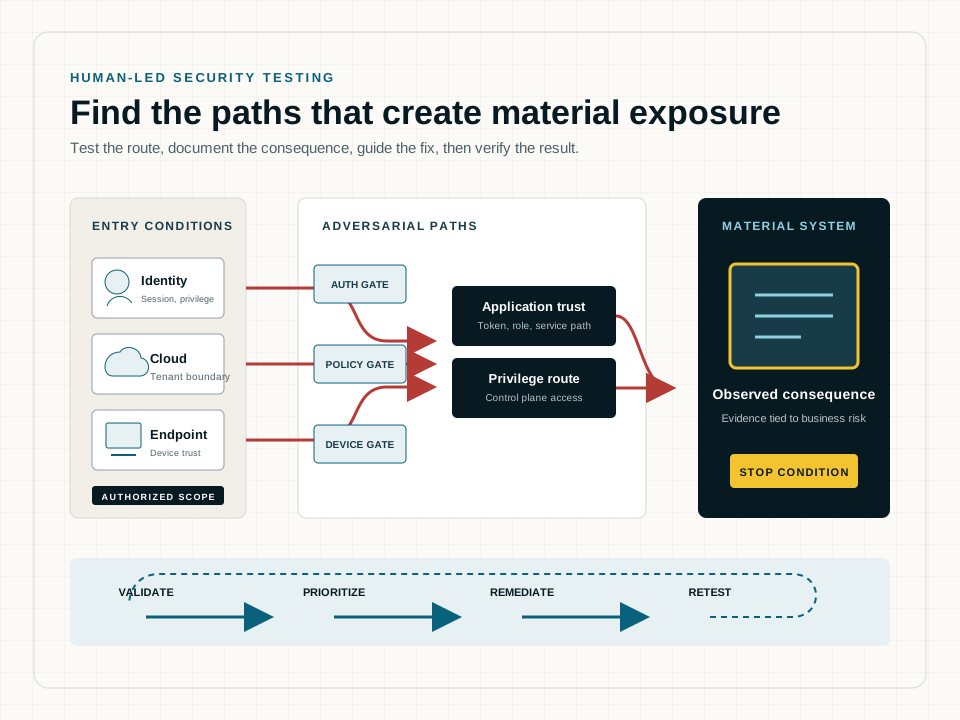
A scanner can produce thousands of entries and still miss the issue that matters. GDF combines authenticated scanning, configuration review, external exposure, asset context, and analyst validation. The result is a working remediation queue, not a PDF organized by generic severity alone.
Coverage begins with a reconciled inventory
Assessment scope is compared with cloud subscriptions, endpoint management, network ranges, DNS, identity systems, internet exposure, and known exceptions. Coverage gaps are reported. Unsupported systems, shadow assets, and administrative interfaces receive explicit attention because they often fall outside routine scanning.
Validation cuts noise and exposes combinations
Analysts validate whether a service is reachable, whether the affected version is present, whether authentication or privilege is required, and whether another control blocks the path. Related findings are grouped when they create one material exposure. Operational consequence ranking reflects the system's function and the likely effect of compromise.
- External attack-surface and authenticated internal assessment
- Cloud, identity, network-device, server, and endpoint coverage
- Configuration and patch-state validation
- Exploitability review for material findings
- Owner assignment, due dates, exceptions, and retest status
Guidance that fits the environment
Remediation may require a patch, configuration change, access restriction, segmentation control, credential reset, application correction, monitoring rule, or compensating control. Guidance states the intended risk reduction and how the correction will be retested. A retest is a point-in-time check of the approved scope and records residual or untested exposure. For fragile or regulated systems, change windows and availability constraints are incorporated from the start.